
The University of Prince Margin is thrilled to announce that: The Bachelor of Science in Cybersecurity and Forensic Computing program at the College of Computer and Cyber Sciences is accredited by the Computing Accreditation Commission of ABET, under the commission’s General Criteria and Program Criteria for Cybersecurity. ABET is a prestigious, internationally recognized organization that ensures the quality of education worldwide. This achievement reflects UPM’s ongoing commitment to excellence in education and international quality standards.
Introduction
The cyber threat landscape is evolving, and cyber security needs to be considered as a continuous effort to enable better protection, detection and mitigation of attacks on individual, corporate or national levels. Study of Cyber Security introduces the concepts and terminologies of the latest cyber threat landscape and enables a better understanding of cyber security. The study also unveils the recent attacks and threats, as well as an explanation of each of their mechanisms to acquire a deeper understanding and knowledge of the attack. The study allows cyber risk assessment and management so as to enable and help organizations and Government be better prepared and more resilient against cyber threats and attacks.
Mission
To contribute to societal security by graduating motivated and passionate cyber security professionals who possess the vital practical skills and theoretical knowledge and by engaging in multidisciplinary research
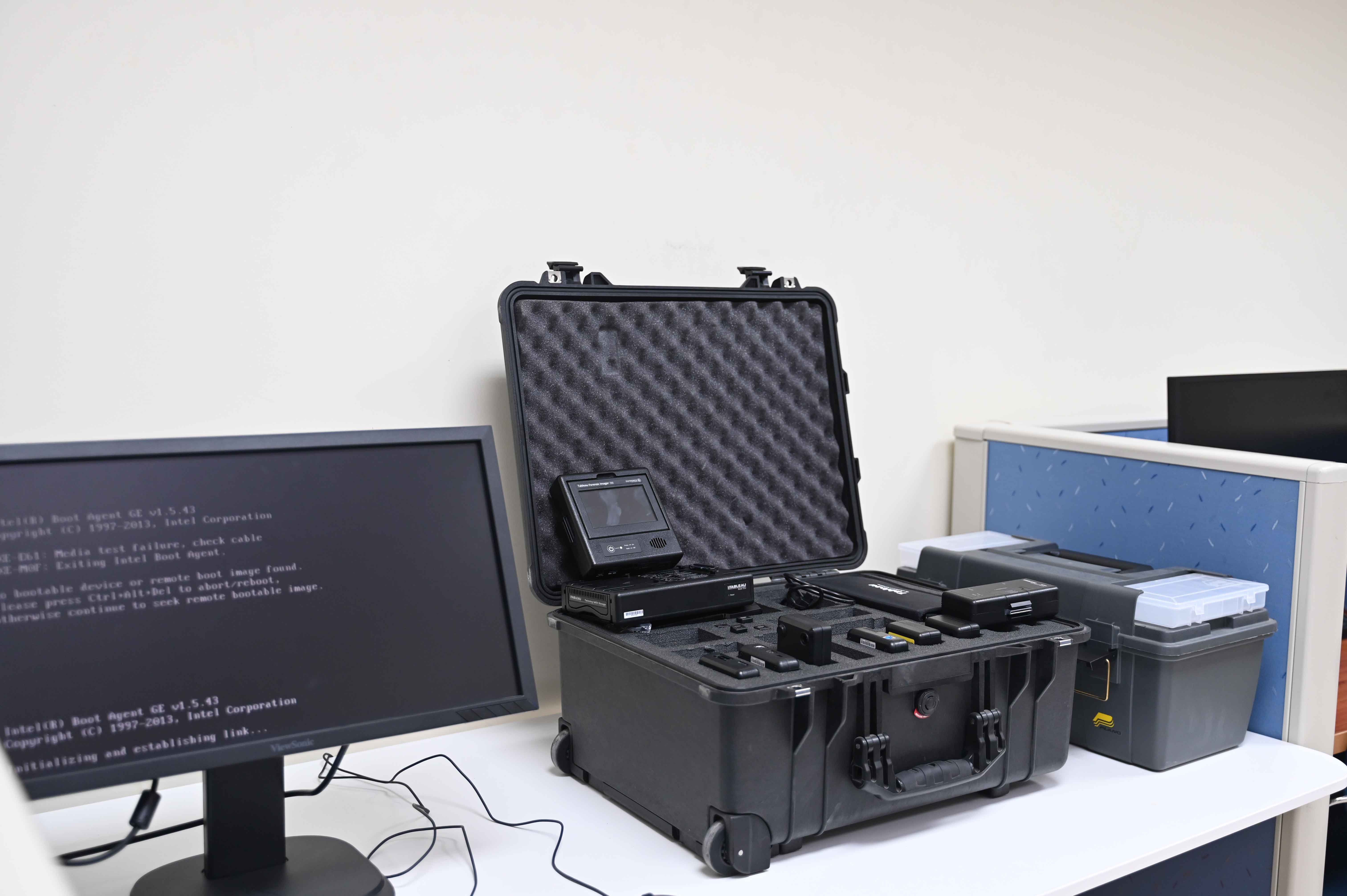
Cybersecurity and Forensic Computing Laboratory
Career opportunities
Cybersecurity Architecture and Engineering
Cybersecurity Governance, Compliance & Risk Management
Cybersecurity Defensive Operations
Cybersecurity Executive Leadership
Cybersecurity Network Operations
Cybersecurity Program Management
Cybersecurity Strategic Planning & Policy Development
Cybersecurity Threat Intelligence
Penetration Testing and Ethical Hacking
-->
Student Learning Outcomes
SO-1: Analyze a complex computing problem and apply principles of computing and other relevant disciplines to identify solutions.
SO-2: Design, implement, and evaluate a computing-based solution to meet a given set of computing requirements in the context of the program’s discipline.
SO-3: Communicate effectively in a variety of professional contexts.
SO-4: Recognize professional responsibilities and make informed judgments in computing practice based on legal and ethical principles.
SO-5: Function effectively as a member or leader of a team engaged in activities appropriate to the program’s discipline.
SO-6: Apply security principles and practices to maintain operations in the presence of risks and threats.
SO-7: Apply qualitative or quantitative study, investigative, and research methods and techniques independently and collaboratively across a wide spectrum of current and emerging cybersecurity topics.
SO-8: Explain cybersecurity and forensics foundations, principles, concepts, procedures, methodologies, operations, policies, techniques and technologies.
-->
Program Educational Objectives
PEO 1: CSFC graduates take practical and concrete initiatives to acquire cyber security and forensics education and continuously grow as professionals ever-focused on improving their skillset and competencies.
PEO 2: CSFC graduates draw on the versatility of their experiences to contribute positively, ethically and respectfully, to the world around them, using their cyber security skillset only as a force for good.
PEO 3: CSFC graduates use their highly developed skills in research and enquiry to identify and creatively tackle real-world problems.
PEO 4: CSFC graduates take a hands-on approach to problem solving by utilizing the practical and theoretical skillset they have acquired over the course of their education.
PEO 5: CSFC graduates build strong professional relationships and work efficiently with others to achieve a common goal.
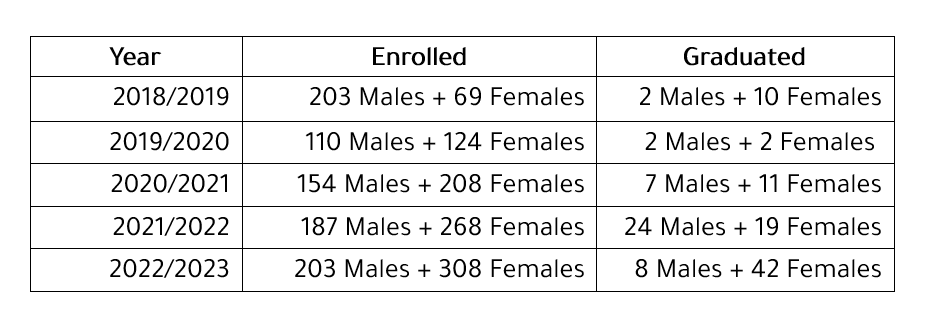
Program Enrolment and Graduation
Study Plan
First Year
| First semester | ||||
|---|---|---|---|---|
| Requisite | Credit Hours | Course Title | Course Code | |
| MATH 002 | 4 | Calculus I | MATH 101 | |
| ENGL 005 | 3 | First Year Composition | ENGL 101 | |
| - | 3 | Islamic Culture | GIAS 101 | |
| 3 | Humanities, Arts, and Languages Elective | GHAL xxx | ||
| PCS 001 | 4 | Introduction to Computing and Programming | CS 111 | |
17 | Total | |||
| Second semester | ||||
| Requisite | Credit Hours | Course Title | Course Code | |
| MATH 101 | 4 | Calculus II | MATH 102 | |
| ENGL 101 | 3 | Introduction to Report Writing | ENGL 102 | |
| CS 111 | 4 | Computer Networks | CS 232 | |
| CS 111 | 4 | Object Oriented Programming | CS 112 | |
| CS 232 | 3 | Introduction To Cyber Security | FC 112 | |
18 | Total | |||
Second Year
| First semester | ||||
|---|---|---|---|---|
| Requisite | Credit Hours | Course Title | Course Code | |
| ENG 102 | 3 | Technical Writing | ENG 201 | |
| MATH 102 | 3 | Introduction to Discrete Systems | CS 201 | |
| CS 112, CS 211 | 4 | Fundamentals of Operating Systems | CS 221 | |
| CS 112 | 4 | Data Structures and Algorithms | CS 211 | |
| CS 232, FC 112, CS 221 | 3 | Offensive Security and Ethical Hacking | FC 281 | |
18 | Total | |||
| Second semester | ||||
| Requisite | Credit Hours | Course Title | Course Code | |
| MATH 102 | 3 | Probability and Statistics | STAT 232 | |
| CS 112 | 3 | Software Engineering | SE 262 | |
| CS 111 | 4 | Computer Architecture and organization | CS 224 | |
| CS 221, FC 112 | 3 | Operating System Hardening | FC 254 | |
| FC 281 | 3 | Defense Mechanisms | FC 382 | |
15 | Total | |||
Third Year
| First semester | ||||
|---|---|---|---|---|
| Requisite | Credit Hours | Course Title | Course Code | |
| CS 112, CS 351 | 3 | Web Application Development | CS 317 | |
| CS 112 | 4 | Fundamentals Of Database Systems | CS 351 | |
| FC 112 | 3 | Software Security | FC 331 | |
| CS 112 | 3 | Artificial Intelligence I | AI 381 | |
| FC 382 | 3 | Advanced Secure Network Design | FC 383 | |
| - | 3 | Ethics and Professionalism in Cyber Security | FC 315 | |
18 | Total | |||
| Second semester | ||||
| Requisite | Credit Hours | Course Title | Course Code | |
| - | 3 | Arabic Language Skills | GIAS 102 | |
| FC 112 | 4 | Introduction To Digital Forensics | FC 302 | |
| FC 317 | 4 | Web Application Security | FC 312 | |
| FC 112 | 3 | Cyber Security Risk Management | FC 362 | |
| STAT 232, CS 201 | 3 | Advanced Cryptography | FC 382 | |
17 | Total | |||
Fourth Year
| First semester | ||||
|---|---|---|---|---|
| Requisite | Credit Hours | Course Title | Course Code | |
| FC 254, FC 282, FC 331, FC 383, FC 302, and FC 312 | 3 | Capstone Project I | FC 491 | |
| FC 302 | 4 | Advanced Digital Forensics | FC 403 | |
| FC 112 | 3 | Security and Privacy Standards Policies | FC 407 | |
| College Approval | 3 | Professional Elective I | FC xxx | |
| College Approval | 3 | Professional Elective II | FC xxx | |
16 | Total | |||
| Second semester | ||||
| Requisite | Credit Hours | Course Title | Course Code | |
| FC 491 | 3 | Capstone Project II | FC 492 | |
| 3 | Social Sciences Elective | GSOS xxx | ||
| - | 3 | College Elective I | C3S XXX | |
| - | 3 | College Elective II | C3S XXX | |
12 | Total | |||
Total credit hours required | ||||
132 | ||||